Hard landing or black swan? FED, inflation, and economic downturn.
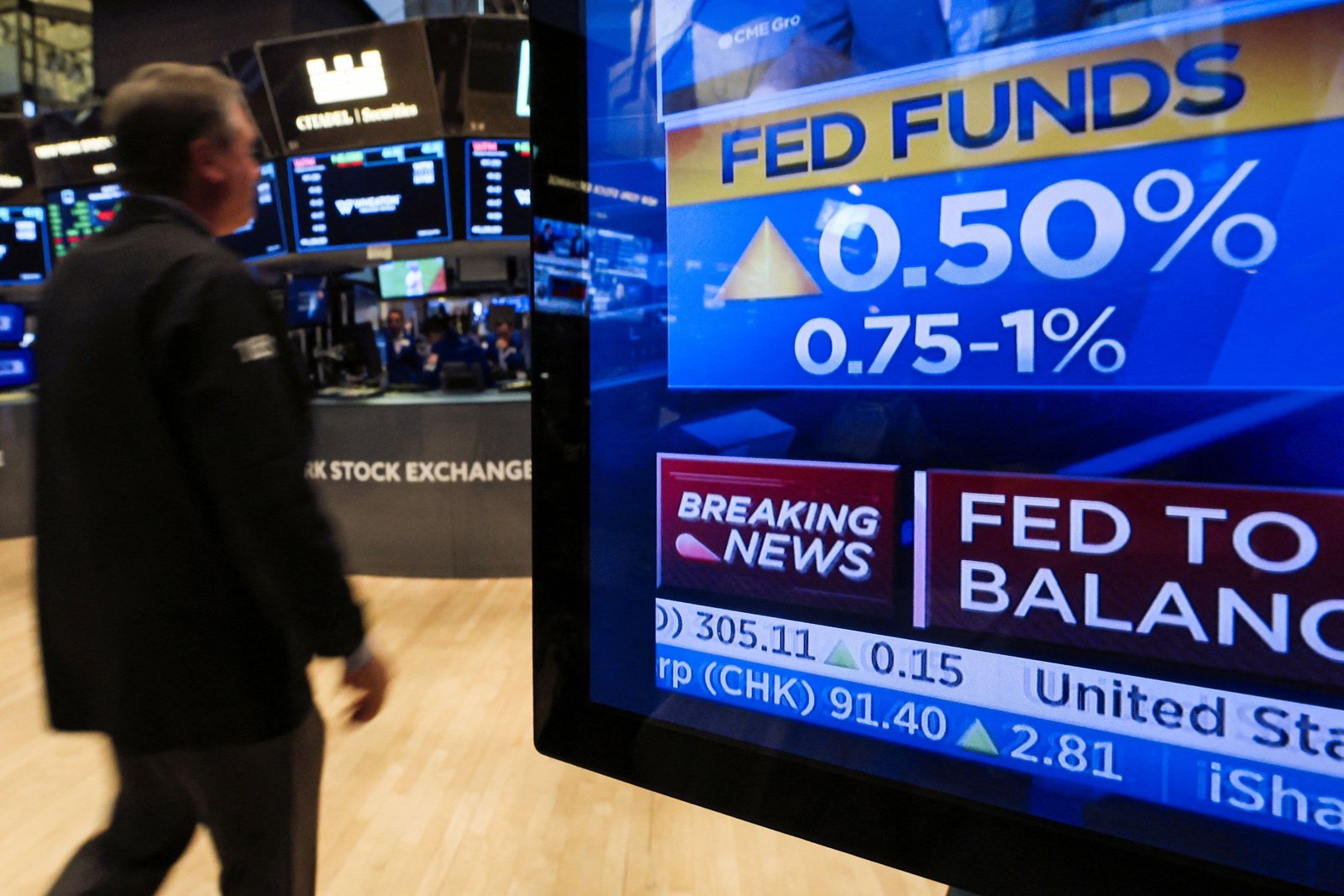
Revisited in September 2026: This call turned out wrong. US inflation peaked at 9.1% in June 2022, and the Fed kept raising rates until mid-2023, to 5.25-5.50%. Yet the economy avoided a recession: inflation was back to around 3% a year later, while unemployment stayed low. Part of the argument held up, since falling energy prices did much of the early disinflation work. But the soft landing I compared to landing a plane on the Hudson is roughly what happened.
The world is facing rising inflation. Despite years of undershooting inflationary targets, countries are now dealing with inflation, and it is currently up to the central banks to correct course. In its toolkit, central banks worldwide have various ways of trying to control inflation, with the most effective and well-known being short-term interest rates. In recent months the Federal Reserve (FED) has been raising short-term rates in an attempt to increase rates all around the economy, therefore disincentivizing investment. Less investment means less demand, which should bring inflation down. Won’t it?
Decreased investment and inflation
Inflation is always a price rise, which does not mean all inflationary pressures are equal. To name a few, inflationary pressures may stem from a rise in costs of production, shifts in demand, shifts in supply, loss of confidence in the currency, and excessive demand. When the FED raises interest rates to contain inflation, it is signaling that it is doing everything in its power to fulfill its mandate of maintaining “low and stable inflation,” and second, tackling the problem identified as excessive demand. There being excessive demand, raising rates will rapidly cut borrowing and guarantee a quick return to normalcy. Otherwise, increasing rates will only pose a barrier for new investments, decrease overall spending and manufacture a recession.
Pressure points for inflation
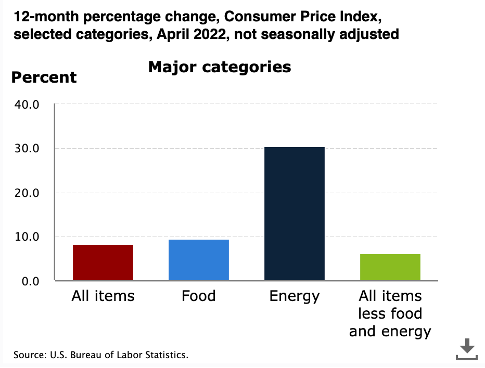
The main index used for measuring inflation in the United States is the Consumer Price Index (CPI), which sits at 8.3% (12 months), well above the FED’s target of 2%. We have three broad categories within the CPI with different weights in the index: Food representing 14.3%, energy representing 7.3%, and all items less food and energy representing the remaining 79.3%. In the graph below, we can notice that energy is the category to have suffered the highest increase in prices in the last 12 months. This data might be misleading simply because energy represents only 7.3% of the whole CPI, so we have to look at how much each category contributed to the overall increase of the index.
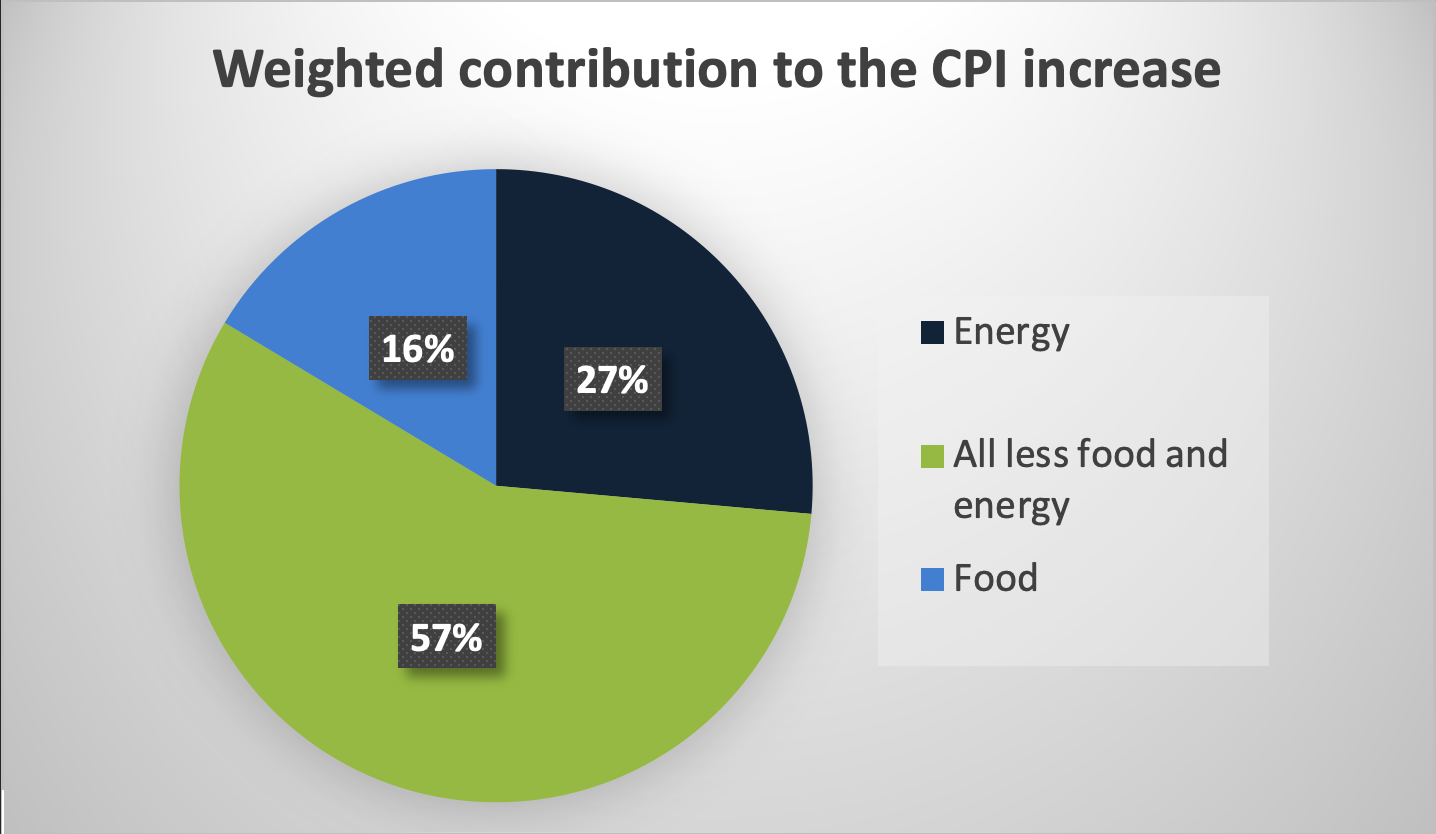
With the weighted contribution of each category, the relevance of the increase in energy prices becomes even more pronounced. Representing only 7.3% of the whole index, its contribution to overall inflation is over 27%.
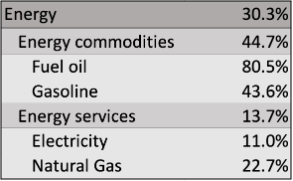
Digging deeper into the energy category, we find that energy commodities rose 44.7% in price, with fuel oil increasing by 80.5% and gasoline by 43.6%. In energy services, there was an increase of 13.7%, with electricity increasing by 11% and natural gas by 22.7%. Whenever we talk about inflation in energy prices, we must consider the secondary effects on the economy. At first, a rise in energy prices might not lead to outright inflation in every sector. However, with enough time, cost increases through transportation and electricity, which inevitably impact all sectors. Energy prices are so important for that reason, even more so when they directly represent 27% of the current rise in prices.
Soft(ish) landing?
What most economic commentators are currently speculating on is the FED’s capacity to turn inflation into a soft landing (which is already turning softish). A soft landing means a decrease in inflation without a severe economic downturn. To accomplish a soft landing, the FED is raising short-term rates. Raising rates to fight an increase in energy and food prices. Maybe if we raise rates enough people will stop using energy and eating. Expecting a softish landing in current conditions is like landing a plane in the Hudson River, a true black swan.
Containing inflation
Even though the FED’s strategy is unlikely to work in the short term, we can expect it to decrease inflation over a more extended period. With higher rates, we will see less demand overall since investment will fall, jobs will perish, and maybe then, people will stop eating. Unless the federal government takes action, what is being referred to as a softish landing will most likely look like a hard landing and, I would dare say, a social and economic disaster.
Fighting back
Fighting inflation should be a shared responsibility, meaning we should not count solely on the FED to do it. The FED can truly fight inflation when the economy is overheating, but not necessarily when we have supply chain imbalances. The Federal Government must use all its resources to fight inflation, as it is one of the most damaging phenomena to a society. Inflation impacts the vulnerable first and foremost, eating away their purchasing power. When someone who could barely make ends meet must spend more on food and energy, they are likely to be unable to satisfy their most basic needs. As counterintuitive as it may sound, sometimes fighting inflation might mean spending more on subsidies and investment in strategic sectors.